


En apparence, répondre « ça va » semble plus simple que de chercher le mot exact. Pourtant, après un message resté sans réponse, « mal » peut cacher de la déception, de l’inquiétude, de la colère ou la peur d’être oublié.
La roue des émotions donne une forme visuelle à ce flou. Elle permet de passer d’une catégorie large à une nuance plus précise, à condition de ne pas traiter le mot choisi comme une vérité définitive. L’intérêt de l’outil tient moins à sa forme qu’à l’attention portée à ce qui se passe.
Nommer ne règle pas tout.
Une carte pour préciser, pas une vérité à suivre
Une roue des émotions organise des mots autour de grandes familles. Certains modèles placent une émotion générale au centre et proposent des nuances plus fines autour d’elle. Dans la roue de Robert Plutchik, les émotions sont également rapprochées ou opposées, et leur position indique une intensité plus ou moins forte.
Les roues disponibles ne découpent pas toutes l’expérience de la même façon. Certaines privilégient six grandes familles, d’autres davantage de catégories ou des termes adaptés aux enfants. Il n’existe donc pas un parcours unique à suivre. Le mot qui convient est celui qui décrit le mieux votre expérience à ce moment-là.
Le mot précis change la question
Dire « je suis en colère » ne raconte pas la même chose que dire « je me sens mis de côté ». La première formulation désigne une émotion. La seconde ajoute une interprétation de la situation. Elle peut être juste, partielle ou contestable. La roue n’a pas pour fonction de trancher à votre place.
Prenons un exemple. Un proche ne répond pas depuis la veille. Le fait observable est l’absence de réponse. La pensée peut être « je ne compte pas pour lui ». L’émotion peut mélanger inquiétude et déception. L’impulsion consiste peut-être à relancer plusieurs fois ou à couper la conversation. Séparer ces éléments évite de transformer une interprétation en certitude.
Un visage fermé ne prouve pas une colère, pas plus qu’un sourire ne garantit la joie. Une émotion ressentie, une émotion montrée et une émotion perçue peuvent diverger. La roue aide d’abord à examiner son propre vécu, pas à deviner celui des autres.
La méthode en cinq mouvements

Une roue devient utile quand elle débouche sur une observation concrète. Quelques minutes suffisent pour ralentir et choisir une réponse moins automatique.
- Partir de la scène. Notez ce qui vient de se produire, sans ajouter tout de suite une explication. « Mon collègue a interrompu ma phrase » décrit la situation; « il me méprise » propose déjà une interprétation.
- Observer la réaction. Repérez la tension, l’agitation, la lourdeur, l’envie de fuir ou celle de répondre. Ces indices ne prouvent pas une émotion précise, mais ils indiquent ce qui mérite votre attention.
- Choisir une famille. Commencez par la zone qui se rapproche le plus de votre expérience : peur, colère, tristesse, joie, surprise ou une autre catégorie proposée par la roue.
- Affiner le mot. Comparez plusieurs nuances : irrité, vexé, frustré, inquiet, découragé ou soulagé. Évaluez aussi l’intensité sur une échelle de 0 à 10. Une même situation peut appeler un mot différent selon l’intensité ressentie.
- Décider du prochain geste. Vous pouvez reporter une réponse, demander une précision, poser une limite, écrire ce que vous ressentez ou chercher du soutien. Le but n’est pas de faire disparaître l’émotion avant d’agir.
Le cerveau ne lit pas vos émotions comme une légende
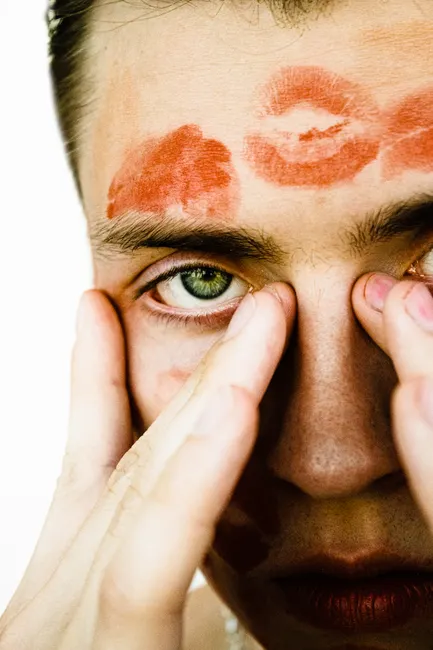
Une roue organise une expérience subjective. Elle ne donne pas accès directement à cette expérience depuis un visage, une voix ou un signal cérébral.
Une étude publiée dans les Proceedings of the National Academy of Sciences le 24 juin 2025 l’illustre dans un cadre très contrôlé. Dix participants ont catégorisé des animations faciales dynamiques correspondant à six émotions, dont la joie, la surprise, la peur, le dégoût, la colère et la tristesse. Les chercheurs ont enregistré leur activité cérébrale par magnétoencéphalographie et décrit une voie fonctionnelle reliant notamment le cortex occipital, la région MT, le sillon temporal supérieur et le gyrus temporal supérieur. Cette expérience renseigne sur le traitement de mouvements faciaux pendant une tâche de catégorisation. Elle ne permet pas de lire avec certitude l’état intérieur d’une personne dans la vie courante.
Les recherches utilisant l’EEG posent une question différente. Un article paru dans Brain Sciences en août 2025 a entraîné un modèle de réseau neuronal convolutif sur la base DEAP. Il a rapporté des taux de classification de 95,21 % pour une activation faible ou forte, de 94,59 % pour une valence faible ou forte et de 93,01 % pour une tâche à quatre catégories. Une méthode Grad-CAM a ensuite identifié les régions d’électrodes qui contribuaient le plus aux résultats, notamment dans les zones préfrontales droites et pariétales gauches.
Un article publié dans Sensors en 2022 a de son côté rapporté une précision de 99,55 % pour un modèle classant des états positifs, négatifs ou neutres à partir de signaux EEG. Ces pourcentages mesurent la capacité d’un système à retrouver des catégories définies dans un jeu de données. Ils ne prouvent pas qu’une émotion se résume à quelques cases ni qu’un appareil connaît le sens personnel d’une expérience.
Une même personne peut ressentir de la joie et de la peur devant un événement. Elle peut afficher du calme par politesse, par habitude ou parce qu’elle ne souhaite pas parler. La roue doit donc ouvrir une enquête intérieure, pas produire un verdict automatique.
Quand l’outil aide, quand il déraille
Le mot ne doit pas devenir un diagnostic
« Je me sens vide », « je suis sur les nerfs » ou « je ne ressens rien » sont des descriptions, pas des diagnostics. Une roue peut aider à préparer une consultation en donnant des exemples précis, mais elle ne permet pas d’identifier à elle seule une dépression, un trouble anxieux, un traumatisme ou un trouble de la personnalité.
Si une souffrance persiste pendant plusieurs semaines ou perturbe le sommeil, le travail, les relations ou la sécurité, le vocabulaire ne suffit plus. Un médecin, un psychologue ou un psychiatre peut examiner la durée, le contexte, les symptômes associés et les besoins de soins.
Avec un enfant, proposer plutôt qu’imposer
Pour un enfant, proposez deux ou trois mots au lieu de déclarer « tu es en colère ». Il peut choisir « inquiet », « déçu », « jaloux » ou aucun de ces termes. La question « où te situes-tu aujourd’hui? » laisse davantage de place qu’une interprétation faite par l’adulte.
À deux, l’exercice fonctionne mieux quand chacun parle de son propre ressenti. Demander « quelle émotion est là? » ouvre une conversation. Demander « pourquoi tu fais toujours ça? » transforme vite la roue en interrogatoire.
Le mot juste ouvre une marge de choix.
Sources et références scientifiques
- EEG-Based Emotion Classification Using Stacking Ensemble Approach – PMC. Sensors (Basel, Switzerland). DOI: 10.3390/s22218550 · PMID: 36366249.
- 1.Mauss I.B., Robinson M.D. Measures of emotion: A review. Cogn. Emot. 2009;23:209-237. doi: 10.1080/02699930802204677. [DOI] [PMC free article] [PubMed] [Google Scholar]. doi:10.1080/02699930802204677.
- 2.Zhong P., Wang D., Miao C. EEG-based emotion recognition using regularized graph neural networks. IEEE Trans. Affect. Comput. 2020;13:1290-1301. doi: 10.1109/TAFFC.2020.2994159. [DOI] [Google Scholar]. doi:10.1109/TAFFC.2020.2994159.
- 3.Ranganathan H., Chakraborty S., Panchanathan S. Multimodal emotion recognition using deep learning architectures; Proceedings of the 2016 IEEE Winter Conference on Applications of Computer Vision (WACV); Lake Placid, NY, USA. 7-10 March 2016; Piscataway, NJ, USA: IEEE; 2016. pp. 1-9. [Google Scholar].
- 4.Petrushin V. Proceedings of the Artificial Neural Networks in Engineering. Volume 710. Springer; Berlin/Heidelberg, Germany: 1999. Emotion in speech: Recognition and application to call centers; p. 22. [Google Scholar].
- 5.Black M.J., Yacoob Y. Recognizing facial expressions in image sequences using local parameterized models of image motion. Int. J. Comput. Vis. 1997;25:23-48. doi: 10.1023/A:1007977618277. [DOI] [Google Scholar]. doi:10.1023/A:1007977618277.
- 6.Anderson K., McOwan P.W. A real-time automated system for the recognition of human facial expressions. IEEE Trans. Syst. Man Cybern. Part Cybern. 2006;36:96-105. doi: 10.1109/TSMCB.2005.854502. [DOI] [PubMed] [Google Scholar]. doi:10.1109/TSMCB.2005.854502.
- 7.Coan J.A., Allen J.J. Frontal EEG asymmetry as a moderator and mediator of emotion. Biol. Psychol. 2004;67:7-50. doi: 10.1016/j.biopsycho.2004.03.002. [DOI] [PubMed] [Google Scholar]. doi:10.1016/j.biopsycho.2004.03.002.
- 8.Li X., Hu B., Zhu T., Yan J., Zheng F. Towards affective learning with an EEG feedback approach; Proceedings of the First ACM International Workshop on Multimedia Technologies for Distance Learning; Beijing, China. 23 October 2009; pp. 33-38. [Google Scholar].
- 9.Davidson R.J., Fox N.A. Asymmetrical brain activity discriminates between positive and negative affective stimuli in human infants. Science. 1982;218:1235-1237. doi: 10.1126/science.7146906. [DOI] [PubMed] [Google Scholar]. doi:10.1126/science.7146906.
- 10.Yuen C.T., San San W., Seong T.C., Rizon M. Classification of human emotions from EEG signals using statistical features and neural network. Int. J. Integr. Eng. 2009;1:3. [Google Scholar].
- 11.Tanaka H., Hayashi M., Hori T. Statistical features of hypnagogic EEG measured by a new scoring system. Sleep. 1996;19:731-738. doi: 10.1093/sleep/19.9.731. [DOI] [PubMed] [Google Scholar]. doi:10.1093/sleep/19.9.731.
- 12.Alhagry S., Fahmy A.A., El-Khoribi R.A. Emotion recognition based on EEG using LSTM recurrent neural network. Int. J. Adv. Comput. Sci. Appl. 2017;8:10. doi: 10.14569/IJACSA.2017.081046. [DOI] [Google Scholar]. doi:10.14569/IJACSA.2017.081046.
- The brain computes dynamic facial movements for emotion categorization using a third pathway – PMC. Proceedings of the National Academy of Sciences of the United States of America. DOI: 10.1073/pnas.2423560122 · PMID: 40526714.
- 1.Dukas R., Cognitive Ecology: The Evolutionary Ecology of Information Processing and Decision Making (University of Chicago Press, 1998). [DOI] [PubMed] [Google Scholar].
- 2.Jack R. E., Schyns P. G., Toward a social psychophysics of face communication. Annu. Rev. Psychol. 68, 269-297 (2017). [DOI] [PubMed] [Google Scholar].
- 3.Haxby J. V., Hoffman E. A., Gobbini M. I., The distributed human neural system for face perception. Trends Cogn. Sci. 4, 223-233 (2000). [DOI] [PubMed] [Google Scholar].
- 4.Gauthier I., Tarr M. J., Anderson A. W., Skudlarski P., Gore J. C., Activation of the middle fusiform ‘face area’ increases with expertise in recognizing novel objects. Nat. Neurosci. 2, 568-573 (1999). [DOI] [PubMed] [Google Scholar].
- 5.Hummert M. L., “Age changes in facial morphology, emotional communication, and age stereotyping” in The Oxford Handbook of Emotion, Social Cognition, and Problem Solving in Adulthood, Verhaeghen P., Hertzog C., Eds. (Oxford University Press, Oxford, UK, 2014), vol. 47. [Google Scholar].
- 6.Rhodes M. G., Anastasi J. S., The own-age bias in face recognition: A meta-analytic and theoretical review. Psychol. Bull. 138, 146 (2012). [DOI] [PubMed] [Google Scholar].
- 7.Little A. C., et al., Symmetry is related to sexual dimorphism in faces: Data across culture and species. PLoS ONE 3, e2106 (2008). [DOI] [PMC free article] [PubMed] [Google Scholar].
- 8.Thornhill R., Gangestad S. W., Facial sexual dimorphism, developmental stability, and susceptibility to disease in men and women. Evol. Hum. Behav. 27, 131-144 (2006). [Google Scholar].
- 9.O’toole A. J., Deffenbacher K. A., Valentin D., Abdi H., Structural aspects of face recognition and the other-race effect. Mem. Cogn. 22, 208-224 (1994). [DOI] [PubMed] [Google Scholar].
- 10.Tanaka J. W., Kiefer M., Bukach C. M., A holistic account of the own-race effect in face recognition: Evidence from a cross-cultural study. Cognition 93, B1-B9 (2004). [DOI] [PubMed] [Google Scholar].
- 11.Zhan J., et al., Modeling individual preferences reveals that face beauty is not universally perceived across cultures. Curr. Biol. 31, 2243-2252 (2021). [DOI] [PMC free article] [PubMed] [Google Scholar].
- 12.Todorov A., Baron S. G., Oosterhof N. N., Evaluating face trustworthiness: A model based approach. Soc. Cogn. Affect. Neurosci. 3, 119-127 (2008). [DOI] [PMC free article] [PubMed] [Google Scholar].
- Interpretable EEG Emotion Classification via CNN Model and Gradient-Weighted Class Activation Mapping – PMC. Brain sciences. DOI: 10.3390/brainsci15080886 · PMID: 40867216.
- 1.Sharma R., Pachori R.B., Sircar P. Automated emotion recognition based on higher order statistics and deep learning algorithm. Biomed. Signal Process. Control. 2020;58:101867. doi: 10.1016/j.bspc.2020.101867. [DOI] [Google Scholar]. doi:10.1016/j.bspc.2020.101867.
- 2.Yin Y., Zheng X., Hu B., Zhang Y., Cui X. EEG emotion recognition using fusion model of graph convolutional neural networks and LSTM. Appl. Soft Comput. 2021;100:106954. doi: 10.1016/j.asoc.2020.106954. [DOI] [Google Scholar]. doi:10.1016/j.asoc.2020.106954.
- 3.Gao Y., Fu X., Ouyang T., Wang Y. EEG-GCN: Spatio-temporal and self-adaptive graph convolutional networks for single and multi-view EEG-based emotion recognition. IEEE Signal Process. Lett. 2022;29:1574-1578. doi: 10.1109/LSP.2022.3179946. [DOI] [Google Scholar]. doi:10.1109/LSP.2022.3179946.
- 4.Wei-Long Z., Bao-Liang L. Investigating Critical Frequency Bands and Channels for EEG-Based Emotion Recognition with Deep Neural Networks. IEEE Trans. Auton. Ment. Dev. 2015;7:162-175. doi: 10.1109/TAMD.2015.2431497. [DOI] [Google Scholar]. doi:10.1109/TAMD.2015.2431497.
- 5.Koelstra S., Muhl C., Soleymani M., Jong-Seok L., Yazdani A., Ebrahimi T., Pun T., Nijholt A., Patras I. DEAP: A Database for Emotion Analysis Using Physiological Signals. IEEE Trans. Affect. Comput. 2012;3:18-31. doi: 10.1109/T-AFFC.2011.15. [DOI] [Google Scholar]. doi:10.1109/T-AFFC.2011.15.
- eng C., Liu W., Feng L., Jia Z. Emotion recognition using hierarchical spatial-temporal learning transformer from regional to global brain. Neural Netw. 2024;179:106624. doi: 10.1016/j.neunet.2024.106624. [DOI] [PubMed] [Google Scholar]. doi:10.1016/j.neunet.2024.106624.
- 7.Wang T., Huang X., Xiao Z., Cai W., Tai Y. EEG emotion recognition based on differential entropy feature matrix through 2D-CNN-LSTM network. EURASIP J. Adv. Signal Process. 2024:1-19. doi: 10.1186/s13634-024-01146-y. [DOI] [Google Scholar]. doi:10.1186/s13634-024-01146-y.
- 8.Houssein E.H., Hammad A., Emam M.M., Ali A.A. An enhanced Coati Optimization Algorithm for global optimization and feature selection in EEG emotion recognition. Comput. Biol. Med. 2024;173:108329. doi: 10.1016/pbiomed.2024.108329. [DOI] [PubMed] [Google Scholar]. doi:10.1016/j.compbiomed.2024.108329.
- 9.Celebi M., Ozturk S., Kaplan K. An emotion recognition method based on EWT-3D-CNN-BiLSTM-GRU-AT model. Comput. Biol. Med. 2024;169:107954. doi: 10.1016/pbiomed.2024.107954. [DOI] [PubMed] [Google Scholar]. doi:10.1016/j.compbiomed.2024.107954.
- 10.Zhao Y., Yang J., Lin J., Yu D., Cao X. A 3D convolutional neural network for emotion recognition based on EEG signals; Proceedings of the 2020 International Joint Conference on Neural Networks (IJCNN); Glasgow, UK. 19-24 July 2020; Piscataway, NJ, USA: IEEE; 2020. pp. 1-6. [Google Scholar].
- 11.Zhao Y., Cao X., Lin J., Yu D., Cao X. Multimodal Affective States Recognition Based on Multiscale CNNs and Biologically Inspired Decision Fusion Model. IEEE Trans. Affect. Comput. 2023;14:1391-1403. doi: 10.1109/TAFFC.2021.3093923. [DOI] [Google Scholar]. doi:10.1109/TAFFC.2021.3093923.
- 12.Selvaraju R.R., Cogswell M., Das A., Vedantam R., Parikh D., Batra D. Grad-CAM: Visual explanations from deep networks via gradient-based localization. Int. J. Comput. Vis. 2020;128:336-359. doi: 10.1007/s11263-019-01228-7. [DOI] [Google Scholar]. doi:10.1007/s11263-019-01228-7.
- A Multi-Epiphysiological Indicator Dog Emotion Classification System Integrating Skin and Muscle Potential Signals – PMC. Animals : an open access journal from MDPI. DOI: 10.3390/ani15131984 · PMID: 40646883.
- 1.Meehan M., Massavelli B., Pachana N. Using Attachment Theory and Social Support Theory to Examine and Measure Pets as Sources of Social Support and Attachment Figures. Anthrozoös. 2017;30:273-289. doi: 10.1080/08927936.2017.1311050. [DOI] [Google Scholar]. doi:10.1080/08927936.2017.1311050.
- 2.Liu S., Li W., Hong X., Song M., Liu F., Guo Z., Zhang L. Correction: Effects of anger and trigger identity on triggered displaced aggression among college students: Based on the “kicking the barking dog effect”. BMC Psychol. 2024;12:691. doi: 10.1186/s40359-024-02216-4. [DOI] [PMC free article] [PubMed] [Google Scholar]. doi:10.1186/s40359-024-02216-4.
- 3.Kim A.S., Bain J.M. A dog with stranger-directed aggression. J. Am. Vet. Med. Assoc. 2024;262:1692-1694. doi: 10.2460/javma.24.07.0469. [DOI] [PubMed] [Google Scholar]. doi:10.2460/javma.24.07.0469.
- 4.Burza L.B., Bloom T., Trindade P.H.E., Friedman H., Otta E. Reading Emotions in Dogs’ Eyes and Dogs’ Faces. Behav. Processes. 2022;202:104752. doi: 10.1016/proc.2022.104752. [DOI] [PubMed] [Google Scholar]. doi:10.1016/j.beproc.2022.104752.
- 5.Zdzisław K., Michał C., Weronika Ż. Categorization of emotions in dog behavior based on the deep neural network. Comput. Intell. 2022;38:2116-2133. [Google Scholar].
- 6.Riemer S., Heritier C., Windschnurer I., Pratsch L., Arhant C., Affenzeller N. A Review on Mitigating Fear and Aggression in Dogs and Cats in a Veterinary Setting. Animals. 2021;11:158. doi: 10.3390/ani11010158. [DOI] [PMC free article] [PubMed] [Google Scholar]. doi:10.3390/ani11010158.
- 7.Guo S., Elmadhoun O., Ding Y. Mental stress studies in animals. Environ. Dis. 2018;3:29-30. [Google Scholar].
- 8.Ng Z.Y., Pierce B.J., Otto C.M., Buechner-Maxwell V.A., Siracusa C., Werre S.R. The effect of dog-human interaction on cortisol and behavior in registered animal-assisted activity dogs. Appl. Anim. Behav. Sci. 2014;159:69-81. doi: 10.1016/j.applanim.2014.07.009. [DOI] [Google Scholar]. doi:10.1016/j.applanim.2014.07.009.
- 9.Meridda A., Gazzano A., Mariti C. Assessment of dog facial mimicry: Proposal for an emotional dog facial action coding system (EMDOGFACS) J. Vet. Behav. 2014;9:e3. doi: 10.1016/j.jveb.2014.09.012. [DOI] [Google Scholar]. doi:10.1016/j.jveb.2014.09.012.
- eiro C., Guo K., Mills D. Author Correction: Dogs and humans respond to emotionally competent stimuli by producing different facial actions. Sci Rep. 2018;8:1. doi: 10.1038/s41598-018-28651-z. [DOI] [PMC free article] [PubMed] [Google Scholar]. doi:10.1038/s41598-018-28651-z.
- rtin A., Mulot B., Nowak R., Blache M.C., Love S., Arnold M., Pinateau A., Arnould C., Lansade L. Captive Blue-and-yellow macaws (Ara ararauna) show facial indicators of positive affect when reunited with their caregiver. Behav. Processes. 2023;206:104833. doi: 10.1016/proc.2023.104833. [DOI] [PubMed] [Google Scholar]. doi:10.1016/j.beproc.2023.104833.
- 12.Das S., Kumari R., Singh K.R. Advancements in computational emotion recognition: A synergistic approach with the emotion facial recognition dataset and RBF-GRU model architecture. Int. J. Syst. Assur. Eng. Manag. 2024;16:1-16. doi: 10.1007/s13198-024-02645-9. [DOI] [Google Scholar]. doi:10.1007/s13198-024-02645-9.
- Emotion Wheel: What It Is and How to Use It.
- Emotion Wheel – Interactive Feelings Wheel.
- Courtney E. Ackerman. The Emotion Wheel: Exploring a Compass for Feelings. 2026.
- Affective Sciences. (2017). The Geneva Emotion Wheel. Retrieved January 3, 2026, from.
- Changing Minds. (2016). Plutchik’s ten postulates..
- Cowen, A. S., & Keltner, D. (2017). Self-report captures 27 distinct categories of emotion bridged by continuous gradients. Proceedings of the National Academy of Sciences, 114(38), E7900-E7909.. doi:10.1073/pnas.1702247114.
- Kircanski, K., Lieberman, M. D., & Craske, M. G. (2012). Feelings into words: Contributions of language to exposure therapy. Psychological Science, 23(10), 1086-1091.. doi:10.1177/0956797612443830.
- Krohn, M. (2007). Robert Plutchik’s psychoevolutionary theory of basic emotions. Dragons Can Be Beaten. Retrieved January 3, 2026, from.
- Mehlomakulu, C. (2015). Using “inside out” to explore emotions. Creativity in Therapy. Retrieved January 3, 2026, from.
- Plutchik, R. (2003). Emotions and life: Perspectives from psychology, biology, and evolution. American Psychological Association..
- Plutchik, R. (1991). The emotions (Rev. ed.). University Press of America..
- Sacharin, V., Schlegel, K., & Scherer, K. (2012). Geneva emotion wheel rating study. Affective Sciences. Retrieved January 3, 2026, from.
- Salovey, P., & Mayer, J. D. (1990). Emotional intelligence. Imagination, Cognition and Personality, 9(3), 185-211.. doi:10.2190/DUGG-P24E-52WK-6CDG.
- Scarantino, A. (2015). The component process model of emotion, and the power of coincidences. Emotion Researcher. Retrieved January 3, 2026, from.
- Shuman, V., & Scherer, K. R. (2014). Concepts and structures of emotions. In R. Pekrun & L. Linnenbrink-Garcia (Eds.), International handbook of emotions in education (pp. 13-35). Routledge/Taylor & Francis Group..
- Downloads – Open Emotion Wheel.
